

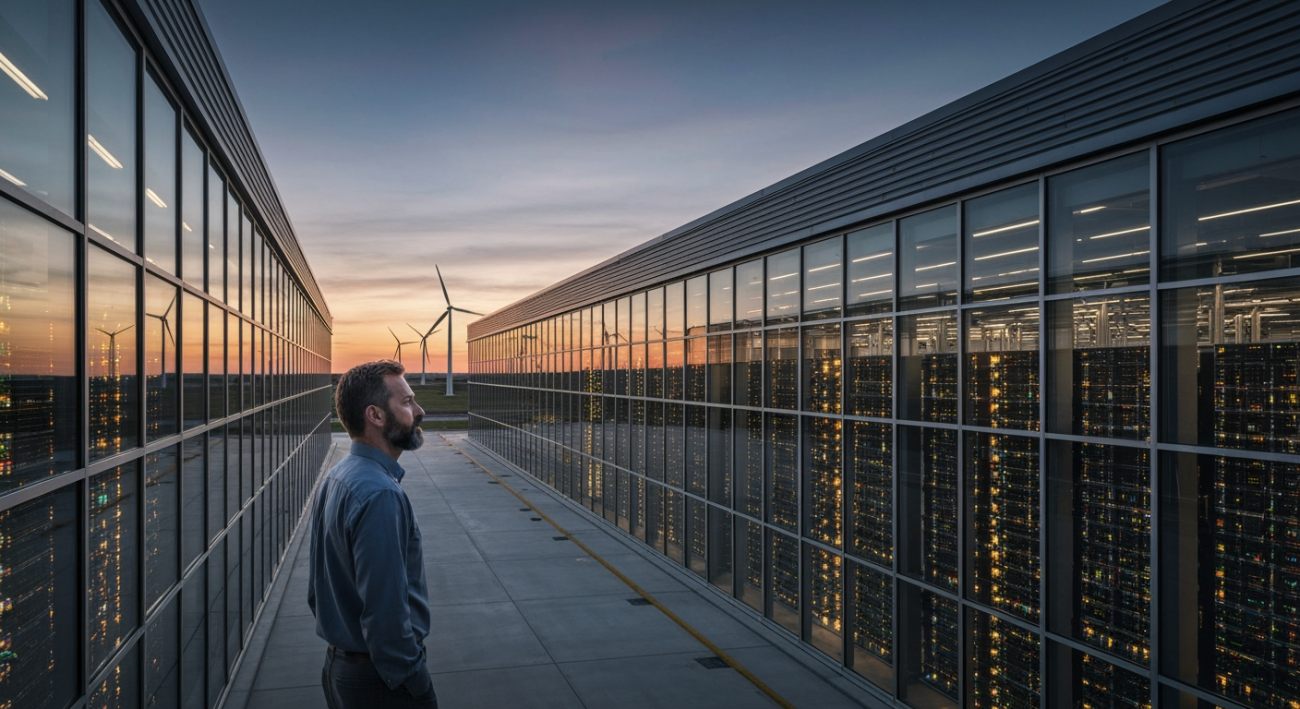
Google’s $40 billion data center investment in Texas: A bold bet on AI and jobs
Google’s $40 billion data center investment in Texas marks a dramatic shift in AI infrastructure and regional economies. Over the next few years, Google plans to build massive facilities across the Lone Star State. These sites will house servers, power gear, and cooling systems that run advanced machine learning models. As a result, the region could see new high-tech jobs and higher demand for skilled workers. However, the investment also raises questions about energy, water use, and local planning.
Local leaders expect supplier growth, construction jobs, and long-term economic spin-offs. Meanwhile, engineers will scale capacity to support large AI clusters and cloud services. Because this is Google’s largest-state pledge, national tech strategies may shift accordingly. Investors and policymakers will watch closely for effects on real estate and power grids. In this article, we unpack what the decision means for AI infrastructure and local communities. We will cover plans, timelines, workforce impacts, and environmental trade-offs. Read on to understand why this bet could reshape both tech and Texas.

Economic impact: Google’s $40 billion data center investment in Texas
Jobs and workforce: Google’s $40 billion data center investment in Texas
Google’s pledge will create construction roles and long term technical jobs. Because these sites require specialized engineers, technicians, and operators, demand for skilled labor will rise. Local trade unions and vocational programs will likely benefit, and community colleges may expand training. For context, Google already invested in Midlothian and Red Oak, Texas, and the company expects multi year development through 2027. For more on the announcement, see the full report at Engadget.
Key job impacts
- Thousands of temporary construction jobs during build out
- Hundreds to thousands of permanent operations roles afterward
- New supplier and contractor positions in logistics and maintenance
- Growth in local training programs and STEM education
Infrastructure and public services: Google’s $40 billion data center investment in Texas
Data centers need reliable power, fiber networks, and water for cooling. Therefore city planners and utilities will see renewed pressure to upgrade transmission lines and fiber backhaul. As a result, counties may negotiate tax incentives or infrastructure deals to host the campuses. Meanwhile, grid operators will study capacity and resilience needs. Other companies are also expanding AI infrastructure in Texas, which may shift regional planning priorities; see CNBC for related developments.
Infrastructure considerations
- Upgrades to electricity transmission and substation capacity
- New fiber routes and edge networking for low latency
- Water management plans for cooling and sustainability
- Road, housing, and local public works expansion during construction
State economy and fiscal effects: Google’s $40 billion data center investment in Texas
The investment will boost local tax receipts and accelerate supplier ecosystems. Consequently small businesses that serve construction and tech teams will see revenue rises. However, tax incentives may limit short term public collections, so governments must balance incentives against long term gains. Because this is Google’s largest state investment, Texas could attract more cloud vendors and chipmakers, increasing wider economic growth in the coming decade.
Table: Comparing data center investments by tech giants
| Company | Investment amount | Location(s) | Estimated economic impact |
|---|---|---|---|
| $40 billion | Armstrong County; Haskell County; broader Texas campuses (through 2027) | Large construction employment; long-term operations jobs; supplier ecosystem growth; significant tax base changes | |
| Meta | $600 billion | Nationwide (planned across United States) | Nationwide buildout; major long-term hiring; large supply chain demand; potential regional economic shifts |
| NVIDIA | Not publicly disclosed | Houston and Dallas, Texas | Manufacturing jobs; strengthening AI hardware supply chains; local supplier contracts |
Key takeaways
- Google’s $40 billion data center investment in Texas is the largest state-level commitment so far.
- Therefore, Texas may see more AI infrastructure clustering, which increases regional economic activity.
- However, incentives and infrastructure costs will affect net fiscal gains.
- As a result, local contractors and training programs will likely expand.
Environmental and technological innovations: Google’s $40 billion data center investment in Texas
Google’s $40 billion data center investment in Texas brings new environmental and technological innovations to the region. Because Google has a history of carbon and energy commitments, these sites will likely emphasize efficiency. However, the scale will also test local water and grid resources. This section outlines likely innovations and the tradeoffs communities should expect.
Energy efficiency and clean power
Large data centers reduce emissions through efficient design and clean energy deals. Google typically pairs advanced cooling, custom power distribution, and optimized server hardware. As a result, power usage effectiveness drops and carbon intensity falls. Google publishes efficiency practices at this link which explain design choices.
Sustainable practices and resource stewardship
Google pursues renewable power purchase agreements and water stewardship plans. Therefore local projects often include long-term renewable contracts and water reuse systems. For corporate sustainability commitments, see this link. Key sustainability features may include:
- Liquid cooling for high-density AI servers, reducing fan energy use.
- Heat recovery or reuse to warm community buildings.
- On-site battery storage to smooth grid demand.
- Water recycling systems and dry-cooling where feasible.
- Renewable energy procurement through wind and solar PPAs.
State-of-the-art technology for AI workloads
Modern AI clusters need dense compute and precise cooling. Consequently data center designs will use modular builds, fiber-rich networks, and optimized power distribution. Google will likely deploy AI-driven load balancing to shift compute to cleaner hours. In addition, co-location with local suppliers can shorten supply chains and reduce transport emissions.
Tradeoffs and mitigation
The projects bring innovation, but also impacts on land, water, and local grids. Therefore planners must negotiate infrastructure upgrades and clear mitigation plans. Because Google has scale, collaboration with utilities and communities can lead to durable solutions. As a result, Texas could gain efficient, low-carbon data campuses that support AI and jobs.
Google’s $40 billion data center investment in Texas is a landmark commitment that will reshape AI infrastructure and local economies. It will drive construction and technical hiring, while expanding supplier networks and vocational training. Because the project will require power and water upgrades, utilities and planners will face challenges. However, smart investments in efficiency and renewables can reduce environmental costs. Local governments must balance tax incentives with long term revenue. Meanwhile, businesses near campuses can capture new demand for services and housing. The state stands to gain sustained economic activity and a stronger tech ecosystem. In addition, the project signals that large cloud providers will cluster where infrastructure supports AI. Therefore Texas could become a national hub for AI compute and manufacturing. In short, this investment matters for jobs, technology, and policy. Looking ahead, outcomes will depend on planning, community partnerships, and innovation. If stakeholders align, the investment could accelerate a low carbon, high skilled economy across the region.
Frequently Asked Questions (FAQs)
What is Google’s $40 billion data center investment in Texas?
Google’s $40 billion data center investment in Texas is a multi year plan to build several large cloud and AI campuses. The funding covers buildings, servers, power distribution, and fiber networks. As a result, Google will boost its AI compute capacity and cloud services in the region.
Why is Google making this investment?
Google needs denser compute to run advanced AI models. Because Texas offers land, grid access, and fiber routes, the company can scale cost effectively. In addition, clustering reduces latency for US customers and attracts suppliers.
What is the timeline and where will the centers be located?
The investment will roll out through 2027. Plans include three new data centers, one in Armstrong County and two in Haskell County. Google also expands existing sites such as Midlothian and Red Oak, which provides operational experience.
How will the investment affect jobs and the local economy?
The build phase will create thousands of construction positions. Afterwards, the campuses will need hundreds to thousands of technical and operations roles. Local contractors, hotels, and services will see increased demand. Therefore regional tax bases and small businesses can grow.
What about environmental impact and technology choices?
Google will apply efficiency measures such as liquid cooling and AI driven power management. The company often signs renewable energy contracts and uses battery storage. However, projects raise water and grid concerns, so planners must require mitigation and long term monitoring.
