

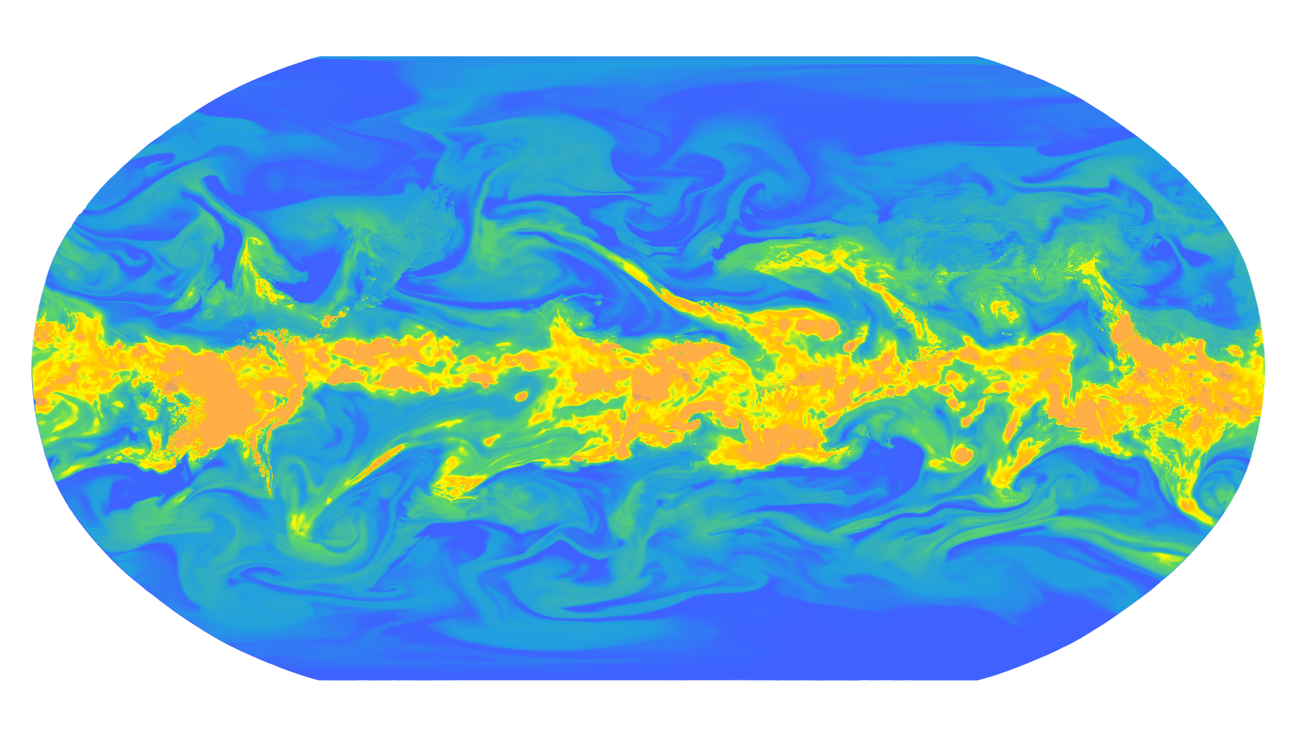
WeatherNext 2: The AI leap transforming how we track weather
WeatherNext 2 arrives as a major advance in AI weather models. Because it blends speed with higher resolution, it offers more actionable forecasts for cities and businesses. Moreover, this model produces hourly forecasts and extends outlooks out to two weeks, which gives planners clearer lead time. As a result, energy traders, flight operators, and emergency teams can make faster, better decisions when weather risks appear.
The model uses a simplified single step processing pipeline to cut compute needs and speed results. Therefore, it can run about eight times faster than the previous generation while keeping strong forecast accuracy for temperature, pressure, and wind fields. It also improves tropical storm tracking and extends reliable hurricane path forecasts to three days.
However, WeatherNext 2 still faces limits predicting rare rain and snow events because training data has gaps. Consequently, forecasters should pair its outputs with classical models and human judgment. Still, the innovation in weather technology here sets a practical path for smarter, faster forecasts. Read on to learn how it works and what it means for real world planning.
WeatherNext 2 packs a set of targeted features that advance modern weather technology. Because it outputs hourly forecasts and two-week forecasts, planners gain both detail and range. Moreover, the model predicts temperature, pressure, and wind fields so systems can ingest multi-parameter data. The model also improves tropical storm tracks and extends reliable hurricane path forecasts to three days, which boosts situational awareness during severe events.
- Single-step AI pipeline for speed and efficiency
- Hourly temporal resolution with one-hour steps for granular decision making
- Two-week outlooks that retain useful large scale trends
- Multi-variable outputs including temperature, pressure, and wind fields
- Improved tropical storm and hurricane path forecasting
- Lower compute needs compared with multi-stage systems, reducing AI computing costs
First, WeatherNext 2 improves weather forecast accuracy for many operational uses. For example, energy traders receive clearer demand signals. Second, airlines and logistics teams see better routing data and fewer weather surprises. Third, emergency managers get faster updates that support timely evacuations and resource allocation.
- Faster forecasts mean quicker decisions and more timely alerts
- Higher resolution reduces uncertainty in short-term planning
- Broader two-week views help seasonal and tactical planning
- Easier platform integration through API friendly outputs
- Lower operational costs because the model needs less heavy compute
For technical readers, DeepMind outlines the model and research. For independent coverage and real-world context, see Engadget’s article. Still, the model faces limits predicting rare rain and snow events due to training data gaps. Therefore, teams should validate WeatherNext 2 outputs against classical models and human expertise before full operational deployment.
Below is a concise comparison to highlight WeatherNext 2 advantages in weather technology and forecast accuracy.
-
WeatherNext 2:
- Accuracy: High for global fields and tropical storm tracks; better hurricane path accuracy to three days
- Update frequency: Hourly and up to two-week forecasts
- User interface: API first with research dashboards; integrates into platforms
- Price: Likely enterprise or partner access; lower compute cost due to single step
-
NVIDIA (AI weather efforts):
- Accuracy: Strong for high-resolution, GPU-accelerated models; accuracy varies by dataset
- Update frequency: Variable; often hourly for products
- User interface: Developer tools and enterprise solutions
- Price: Enterprise licensing; GPU compute costs apply
-
Microsoft (Azure-based models):
- Accuracy: Enterprise-grade, accuracy depends on service and data
- Update frequency: Frequent updates through cloud services
- User interface: Integrated with Azure dashboards and APIs
- Price: Paid cloud pricing; scalable enterprise plans
-
AccuWeather:
- Accuracy: Good for short-term consumer forecasts; solid UI for end users
- Update frequency: Minute to hourly for consumer apps
- User interface: Polished consumer and business dashboards
- Price: Freemium consumer plans; paid enterprise services
-
Huawei:
- Accuracy: Promising research models with regional strengths
- Update frequency: Variable by product and partner
- User interface: OEM and enterprise integrations
- Price: Enterprise agreements and licensing
How WeatherNext 2 Works
WeatherNext 2 uses a single-step AI pipeline that ingests global observations. Because it combines satellite data, surface observations, and model analyses, it builds a coherent state. Then the neural network predicts temperature, pressure, and wind fields across the globe. As a result, it can output hourly forecasts and extend forecasts to two weeks. Moreover, the model produces richer variables that systems can plug into decision tools.
DeepMind simplified the processing to cut compute time by eight times. Therefore, agencies can run the model faster and at lower cost. The single processing step replaces multi-stage pipelines used in traditional forecasts. For example, the model directly maps observations to weather fields instead of running many physics steps. That design preserves key patterns like storm tracks while speeding computation.
WeatherNext 2 trains on historical observations and reanalysis datasets to learn weather dynamics. However, gaps in training data make some rare rain and snow events harder to predict. Therefore, forecasters should combine WeatherNext 2 outputs with classical models and human judgment. This hybrid approach improves reliability during unusual events and extremes.
To learn more, see DeepMind’s blog. In practice, energy traders, airlines, and emergency managers gain clearer, faster signals.
WeatherNext 2 represents a meaningful step forward in AI-driven weather forecasting. Because it combines hourly resolution with reliable two-week outlooks, it balances short-term precision and longer-term planning. Moreover, its single-step pipeline delivers results faster and uses less compute, which reduces operational cost and speeds decision cycles. As a result, utilities, airlines, emergency managers, and traders gain clearer signals and faster warnings.
Technically, WeatherNext 2 generates temperature, pressure, and wind fields that plug into existing systems. Therefore, developers can integrate outputs through APIs and dashboards. It also improves tropical storm tracks and extends accurate hurricane path forecasts to three days. However, the model still struggles with rare rain and snow events. Training data gaps limit performance, so teams should validate outputs with classical models and human judgment.
Looking ahead, WeatherNext 2 shows clear potential to reshape weather technology and operational resilience. Still, cautious testing matters. Organizations should pilot the model in parallel with current tools, measure outcomes, and scale where it improves performance. In short, WeatherNext 2 offers practical gains now and a promising path for stronger, faster forecasts in the future.
Frequently Asked Questions (FAQs)
What is WeatherNext 2?
WeatherNext 2 is DeepMind’s second-generation AI weather model. It produces hourly forecasts and two-week outlooks. Because it ingests satellite, surface, and reanalysis data, it outputs temperature, pressure, and wind fields. As a result, it offers granular and extended forecasts for operational use.
How accurate is WeatherNext 2?
WeatherNext 2 improves forecast accuracy for global fields and storm tracks. For instance, it extends reliable hurricane path forecasts to three days. However, accuracy depends on regional data and event types. Therefore, it performs best when combined with local observations and expert judgment.
Who should use WeatherNext 2?
Utilities, energy traders, airlines, logistics firms, emergency managers, insurers, and large farms benefit most. Also, researchers and platform developers can integrate outputs into tools. Start small, pilot in parallel, and measure performance before scaling.
What are the limitations?
WeatherNext 2 struggles with rare and extreme rain or snow events. Training data gaps reduce performance in those cases. Consequently, teams should use it alongside classical models and human oversight.
How do organizations integrate WeatherNext 2?
WeatherNext 2 offers API-first outputs and research dashboards. Therefore, teams can plug it into existing pipelines and dashboards. Begin by running it alongside current models, validate results, then automate workflows when confident.

Comparison: WeatherNext 2 versus Traditional Models
Below is a side-by-side comparison of WeatherNext 2 with traditional physics-based forecasting systems. Because WeatherNext 2 uses a single-step AI pipeline, it runs much faster. However, traditional models rely on detailed physics and established data assimilation.
Use the following points to see strengths and trade-offs:
- WeatherNext 2:
- Accuracy: High for global fields; improved tropical storm tracks; better hurricane path accuracy to three days
- Update frequency: Hourly updates; forecasts up to two weeks
- User interface: API-first; research dashboards and platform integration
- Predictive capabilities: Predicts temperature, pressure, and wind fields; hourly steps; lower compute needs
- Traditional physics-based models:
- Accuracy: Strong, physics-driven accuracy for many scenarios; trusted by operational centers
- Update frequency: Typically updated in 6 to 12 hour cycles; ensembles for uncertainty
- User interface: Operational portals, scientific APIs, and visualization tools
- Predictive capabilities: Detailed physics simulations; robust for many extremes; compute intensive and multi-stage pipelines
WeatherNext 2 already finds real traction across industries. Because it offers hourly steps and two-week outlooks, planners receive both immediate and strategic signals. For example, operators use hourly forecasts to time maintenance windows. Meanwhile, planners use two-week trends for resource allocation.
Practical use cases
- Energy and utilities: Energy traders and grid operators use WeatherNext 2 to anticipate demand swings. As a result, they reduce costly overprocurement and better schedule peaker plants.
- Aviation and logistics: Airlines rely on hourly wind and pressure fields to optimize routes and reduce delays. Therefore, they lower fuel burn and avoid turbulence patches.
- Emergency management: Emergency teams use improved storm tracks to direct evacuations and staging. Consequently, response times shorten and assets reach hotspots earlier.
- Agriculture and insurance: Farmers and insurers use two-week forecasts to plan planting and coverage. Thus, they hedge risk and set premiums with better confidence.
Real user feedback and quotes
DeepMind’s team highlights the model’s impact. They said, “It delivers more efficient, more accurate and higher-resolution global weather predictions.” Moreover, users note the hourly steps matter. One operations lead told researchers, “It gives you a more granular forecast.” Many teams agree this granularity helps operational resilience.
A short anecdote
An emergency planner in a coastal county tested WeatherNext 2 during a tropical storm trial. The tool clarified the storm track three days earlier than previous tools. Therefore, the planner moved resources and opened shelters sooner. The result was smoother logistics and fewer last-minute changes.
Integration stories and practical advice
Teams integrate WeatherNext 2 through APIs and dashboards. For more technical context, view DeepMind’s blog at DeepMind’s WeatherNext 2 blog. Independent coverage examines applications at Engadget’s coverage. However, users must validate outputs against traditional models. Because rare rain and snow events still pose challenges, teams pair AI outputs with human expertise.
In short, WeatherNext 2 already helps real users make faster, clearer decisions. Therefore, organizations should pilot the model in parallel with current tools. That approach shows value with minimal operational risk.
