

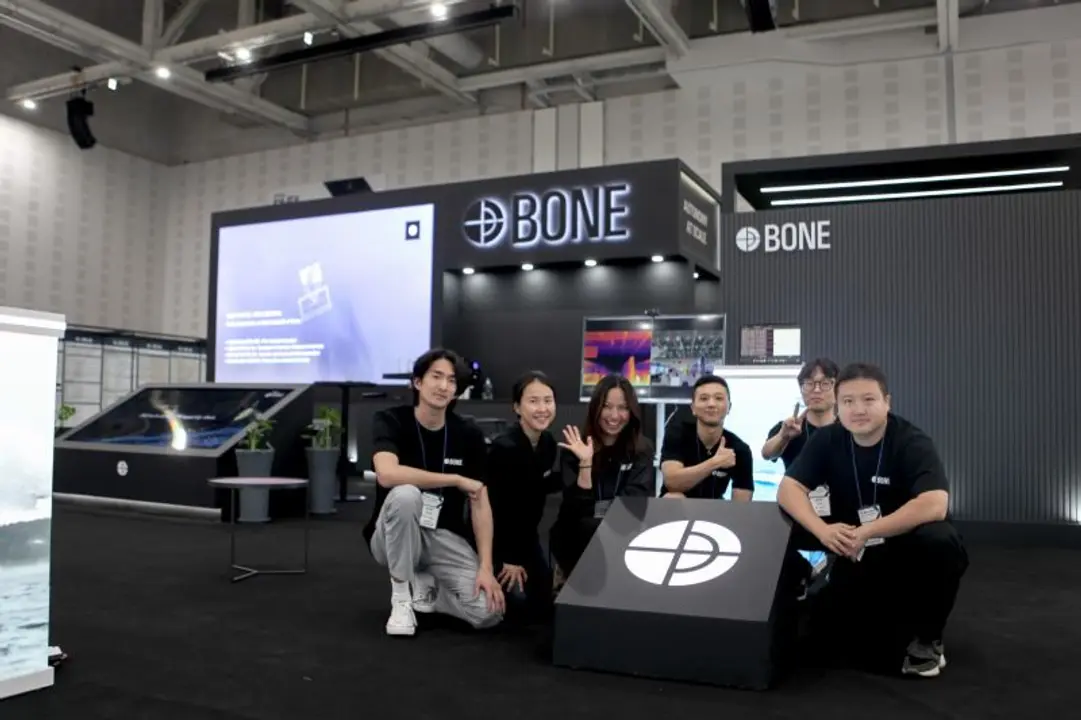
Bone AI seed funding marks a turning point for AI-powered robotics, attracting wide investor interest. As startups converge software, autonomy, and hardware, this financing trend signals a push into defense and manufacturing. Therefore, Bone AI’s $12 million seed round shows how capital can build a physical AI supply chain.
Founded in Seoul and Palo Alto, the company pairs AI simulation and embedded engineering with manufacturing. Because Bone aims to serve UAVs, UGVs, and USVs, investors see defense and commercial opportunities. As a result, this article explores the $12 million raise, market context, and Bone’s strategy for scaling physical AI.
We will examine how the seed financing links to South Korea’s manufacturing strengths and global defense demand. Moreover, we highlight strategic hires, the D-Makers acquisition, and early B2G revenue milestones. Read on to see why Bone AI could reshape the industrial backbone for intelligent machines.

Bone AI seed funding: what it enables
Seed funding gives startups runway to build product and market fit. Bone AI seed funding covers early engineering, prototyping, and initial manufacturing. Because physical AI blends hardware and software, early capital must pay for expensive components and test rigs. As a result, this round matters for both tech and supply chain development.
Key uses of the $12 million seed round include:
- Product development and AI simulation workloads, which require compute and data pipelines.
- Embedded engineering and autonomy stacks for UAVs, UGVs, and USVs.
- Hardware design, tooling, and prototype manufacturing at scale.
- Regulatory testing and certifications for defense customers.
- Talent hiring and strategic hires across Seoul and Palo Alto.
- Strategic acquisitions and IP consolidation, such as the D-Makers deal.
Why this seed funding is critical for AI startups
- First, hardware startups face long lead times and high costs, because supply chains and fabrication matter.
- Second, investors bring domain expertise and networks. For example, the round was led by Third Prime.
- Third, seed capital validates market demand and unlocks B2G contracts and partnerships.
How it influences AI technology
Because Bone ties AI simulation to manufacturing, the funding accelerates physical AI innovations. Moreover, capital helps build sovereign and cost-competitive hardware supply chains. As Lee noted to TechCrunch, no one was building the connective tissue for intelligent machines. Finally, this seed round positions Bone to work within the broader ecosystem that even Nvidia depends on.
Below is a snapshot of recent seed funding deals that show investor interest in AI-powered robotics and autonomy.
-
Company: Bone AI
Funding amount: $12 million
Lead investor(s): Third Prime (lead); Kolon Group (participant)
Date: November 17, 2025
Source: TechCrunch -
Company: Scout AI
Funding amount: $15 million
Lead investor(s): Align Ventures; Booz Allen Ventures
Date: April 2025
Source: PR Newswire -
Company: Origin Robotics
Funding amount: €4 million
Lead investor(s): Change Ventures
Date: October 29, 2024
Source: The AI Insider
Impact of Bone AI seed funding on AI startups
Bone AI seed funding accelerates a new wave of physical AI companies. Because the $12 million seed round covers hardware and software costs, startups gain longer runway. Moreover, founder DK Lee invested over 10 percent personally, which signals strong founder alignment. As a result, investors and partners take the sector more seriously.
Bone AI seed funding influences startups in several ways
- Talent magnet: Seed capital lets teams hire embedded engineers and AI researchers quickly.
- Supply chain building: Funds pay for tooling, prototypes, and manufacturing partnerships.
- Market validation: Lead investors validate demand and open doors to B2G deals.
- Mergers and IP consolidation: Capital enables deals like the D-Makers acquisition.
- Ecosystem effects: Investment attracts suppliers, contract manufacturers, and integrators.
Because physical AI merges autonomy, hardware, and manufacturing, the capital multiplies technical progress. For example, Bone already recorded $3 million revenue and a seven-figure B2G contract in year one. Therefore, other founders see a blueprint for scaling. Furthermore, the round links Korea’s manufacturing strengths to global defense markets. Finally, this seed financing helps construct the industrial backbone that larger AI players rely on. For more context see TechCrunch and Third Prime.
Bone AI seed funding has set a new standard for physical AI startups. This $12 million round validates investment in AI-powered robotics. Because Bone links software, hardware, and manufacturing, the capital matters. It also signals investor belief in defense and industrial use cases.
The funding buys prototype cycles, test rigs, and engineering talent. Moreover, it funds strategic acquisitions and opens B2G doors. As a result, startups gain runway to iterate and scale hardware. Founder alignment and early revenue further de-risk the path.
In short, Bone AI’s seed round helps build the industrial backbone. Therefore, expect more startups to emerge across UAVs, UGVs, and USVs. The long view is hopeful because sovereign supply chains will strengthen. It reinforces physical AI, AI-powered robotics, and defense drones as priority areas. Ultimately, this financing moves us closer to resilient, widely useful physical AI.
Frequently Asked Questions (FAQs)
What is Bone AI seed funding?
Bone AI seed funding refers to the companys $12 million early-stage round. It funds product development, prototypes, and initial manufacturing. Because the round was led by Third Prime, it also signals investor confidence.
Why does seed funding matter for AI hardware startups?
Seed capital pays for costly hardware, test rigs, and engineering talent. It shortens time to prototype and validates market demand. As a result, startups can win early B2G contracts and scale faster.
How will this funding affect the AI startup ecosystem?
The round attracts suppliers, contract manufacturers, and talent to the sector. Moreover, it helps build sovereign supply chains. Therefore, more physical AI startups will find viable paths to market.
Will Bone AI seed funding lead to more defense partnerships?
Likely yes. Bone already won a seven-figure B2G contract and generated early revenue. Consequently, the financing boosts credibility with defense buyers.
How can founders attract similar seed investment?
Focus on clear technical milestones, early revenue, and strategic hires. Build prototypes quickly, prove unit economics, and show founder alignment. Finally, cultivate investors who know defense and manufacturing.
