


Samsung Beverage Center: Built-in pitcher reshapes beverage appliance strategy
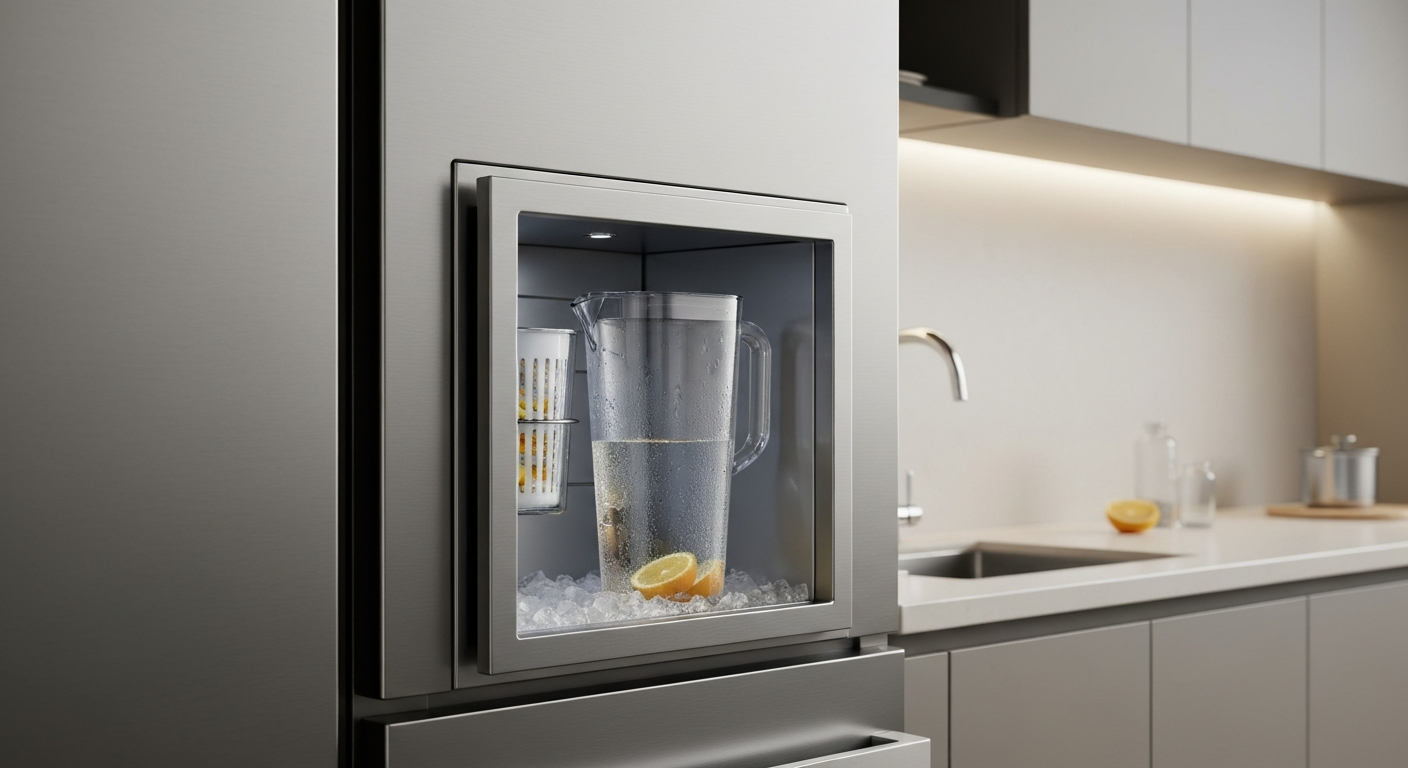
The Samsung Beverage Center embeds a 48-ounce chilled water pitcher behind a thin panel on Bespoke refrigerators, a feature Samsung introduced in 2021 and subsequently expanded across its product portfolio. The pitcher sits inside a chilled compartment so every pour delivers reliably cold water for immediate consumption. Furthermore, the system refills automatically and supports individual glass fills or pitcher removal for multiple servings. Industry observers note that Samsung’s retention of patents on the automatic refill mechanism creates a potential barrier to entry, and therefore the Beverage Center functions as both a user experience differentiator and a competitive moat for Samsung’s appliance business. Engadget observed that “all of the water is cold,” underscoring the practical benefit for dinner-time service and beverage infusion.
Market implications of Samsung Beverage Center
The Samsung Beverage Center consolidates a chilled 48-ounce built-in pitcher behind a thin panel on Bespoke refrigerators. It functions as a tangible product differentiator introduced in 2021 and scaled across Samsung’s portfolio. Because it offers automatic refills and a strainer basket for infused water, it addresses evolving consumer preferences for convenience and premium hydration solutions.
Strategically, the Beverage Center strengthens Samsung’s competitive positioning by creating a product moat. Engadget observed that “because Samsung holds some patents related to its automatic water pitcher, you probably won’t see a similar feature on any of its competitors’ fridges anytime soon.” Engadget article. Therefore competitors face replication challenges.
From a market share perspective, the feature may increase average selling prices and customer retention. Samsung’s product pages show broad appliance integration, thereby enabling cross-sell opportunities (Samsung Bespoke refrigerators).
Samsung Beverage Center competitive comparison
The table summarizes specifications, retail pricing ranges, and strategic positioning.
User adoption and early sales data
Early indicators point to steady adoption of the Samsung Beverage Center among premium refrigerator buyers. Retail channels and corporate disclosures show momentum for the Bespoke series since 2021. Samsung reported over 3 million Bespoke units sold in five years, which suggests uptake of integrated features Samsung Investor Presentation VDDA 2024.
Market context supports this trend because Samsung held 21 percent of the U.S. appliance market in 2023 Korea Times article.
Industry commentary frames the Beverage Center as a value-add for upmarket consumers. Engadget noted consumer praise for chilled water consistency, stating that “all of the water is cold” Engadget article. Consequently, analysts forecast modest uplift to average selling price and customer retention. However, adoption could moderate because some buyers cite maintenance and dishwasher concerns for the built-in water pitcher.
The Samsung Beverage Center consolidates a chilled 48-ounce built-in pitcher and automatic refill behind a thin panel. Samsung introduced the feature in 2021 and scaled it across Bespoke models, creating measurable product differentiation. Because Samsung retains patents, the design establishes a defensible moat against rapid competitor replication. As a result, the feature supports premium pricing, cross-sell opportunities, and modest market share gains. However, maintenance concerns and a non-dishwasher pitcher may limit uptake among cost-conscious buyers. Going forward, analysts expect incremental average selling price uplift and sustained retention benefits if integration expands. Therefore, Samsung can convert functionality into measurable revenue growth while managing operational trade-offs.
Frequently Asked Questions (FAQs)
What is the Samsung Beverage Center?
The Samsung Beverage Center is a built-in hydration module that houses a chilled 48-ounce pitcher behind a thin refrigerator panel.
Samsung introduced the feature in 2021 and scaled it across Bespoke models.
It provides automatic refills, a strainer basket for infusions, and individual glass dispensing.
The design targets premium segments and supports higher average selling prices.
How does it affect competitive positioning?
Samsung uses the Beverage Center as a product differentiator to create a competitive moat.
Because Samsung holds patents on the automatic refill mechanism, competitors face replication barriers.
As a result, Samsung can sustain pricing premiums and cross-sell within its appliance portfolio.
Market analysts note that patent enforcement timelines matter to competitive dynamics and replication risks.
What operational considerations should buyers expect?
The pitcher is not dishwasher safe and requires manual cleaning.
It sits inside the chilled compartment, so maintenance schedules must account for hygiene.
Service teams should track replacement parts and cleaning guidance to preserve user satisfaction.
Warranty terms should reflect pitcher maintenance requirements.
Service metrics must track cleaning-related returns regularly.
What early adoption evidence exists?
Bespoke series sales exceeded three million units over five years, indicating uptake of integrated features.
Industry commentary cites positive user feedback on chilled water consistency.
Analysts forecast modest uplift to average selling price and retention.
Retail partners report stronger sellthrough for Bespoke configurations with integrated features versus standard models.
What are the market risks and future outlook?
Risks include maintenance concerns and potential limits on mainstream adoption.
However, if Samsung expands integration and mitigates service issues, the Beverage Center could deliver sustained revenue growth and incremental market share.
Operational fixes and clearer cleaning instructions could reduce buyer friction and accelerate mainstream adoption.
