


Samsung Beverage Center represents a strategic product innovation by Samsung Electronics in the smart-appliance market. Introduced in 2021, the feature embeds a built-in automatic water pitcher inside Bespoke AI 4-door refrigerators. Initially available on premium models, Samsung later broadened distribution to midrange configurations. Because Samsung holds patents on the automatic pitcher, competitors face barriers to replication. The pitcher holds 48 ounces and includes a strainer basket for infused water and iced tea. Moreover, the dispenser hides behind a thin left panel to preserve cabinet aesthetics. Sam Rutherford of Engadget described the system as ‘you never need to refill it manually’. As a result, the Beverage Center positions Samsung to differentiate through convenience, cold-chain integration, and experiential kitchen design. Analysts view the move as a tactical product differentiation play within consumer electronics and connected home appliances.
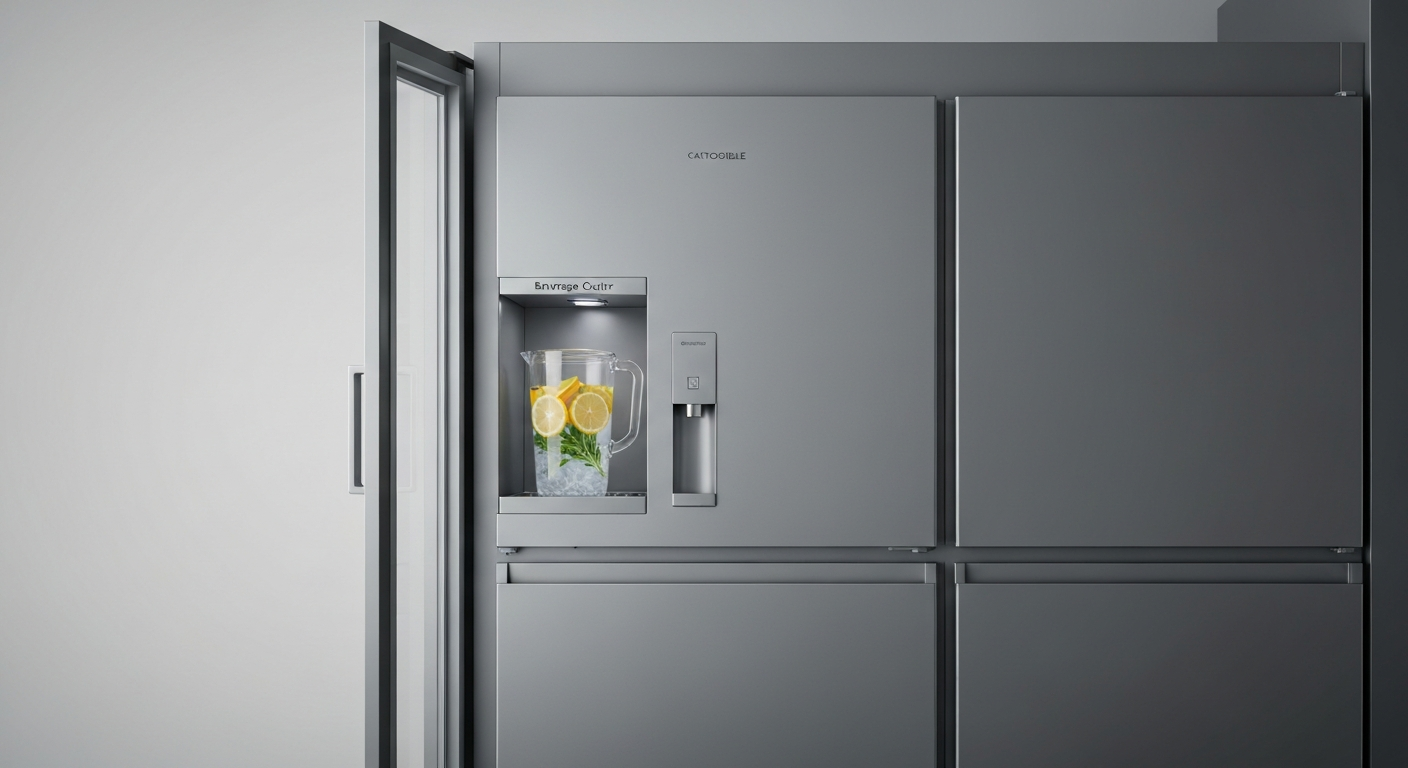
Samsung Beverage Center market position and competitive landscape
The Samsung Beverage Center establishes a differentiated product node within Samsung Electronics’ Bespoke portfolio. Because it pairs mechanical innovation with patented design, it raises competitors’ replication costs. Moreover, market indicators show growing consumer demand for connected kitchen features, and third-party research into connected home appliances projects steady adoption that benefits vendors offering unique smart modules; for example, Statista tracks rising uptake of connected home appliances and identifies smart refrigerators as a distinct growth area at Statista: Connected Home Appliances.
Analysts and reviewers, including Engadget‘s Sam Rutherford, characterize the Beverage Center as a tactical differentiation play that combines convenience, cold-chain integrity, and enhanced user experience, and they note Samsung’s patents form a defensive moat that limits near-term imitation while influencing channel placement, service provisioning, and price positioning; see Engadget article.
As a result, Samsung can pursue premium pricing and selective channel expansion and extend value-added services globally.
Samsung Beverage Center compared with competitor beverage refrigeration products
The table highlights structural differences that affect replication costs and channel strategy. Because Samsung embeds a patented mechanical subsystem, competitors lack a direct analogue. Therefore, Samsung can sustain premium pricing while competitors compete on connectivity, service, or price. As a result, the Beverage Center functions as both product differentiation and a defensive asset for Samsung.
Below are related keywords and semantic terms for search optimization.
- Beverage Center
- water pitcher that refills itself
- hidden dispenser behind a panel
- infused water strainer
- patented automatic pitcher
Strategic implications of Samsung Beverage Center
The Samsung Beverage Center alters Samsung Electronics’ product strategy by converting feature engineering into a marketable asset. Because the feature couples a patented AutoFill water pitcher with AI-enabled refrigeration, it creates a differentiation vector. As a result, Samsung can justify premium pricing and reinforce margins across the Bespoke portfolio. Moreover, the Beverage Center supports channel segmentation; Samsung can deploy it selectively in high-end SKUs and in lifestyle retail. Analysts observe potential trade-offs. For example, some note that premium pricing risks slower volume growth, while others highlight the long-term value of ecosystem lock-in. AINVEST’s analysis points to trade-offs between innovation and consumer skepticism at high price points. Engadget framed the Beverage Center as a defensible design play, noting that “you never need to refill it manually”. Operationally, Samsung gains service and subscription levers. For instance, remote diagnostics and filter replacement services can generate recurring revenue. Finally, because Statista shows rising connected-appliance adoption, Samsung’s move aligns with broader market trends. Therefore, competitors must choose between imitation, which is costly, or competing on price and services.
The Samsung Beverage Center represents a targeted product innovation that strengthens Samsung Electronics’ experiential appliance strategy. By embedding a patented AutoFill pitcher into Bespoke refrigerators, Samsung creates a tangible differentiation point. Consequently, the company can pursue premium pricing and selective channel placement.
Strategically, the Beverage Center converts mechanical engineering into a commercial asset and a defensive moat. It also enables recurring revenue through service and consumable bundles. Therefore, Samsung reinforces margins while extending the Bespoke brand narrative.
For competitors, imitation will be costly because patents protect the core mechanism. Accordingly, rivals must compete on connectivity, price, or aftermarket services. As a result, market dynamics will favor firms that can scale unique hardware or deliver superior ecosystem services.
Ultimately, the Beverage Center underscores how small, user-centric innovations can alter competitive positioning. Going forward, Samsung’s move sets a benchmark for appliance differentiation.
Frequently Asked Questions (FAQs)
Q: What is the Samsung Beverage Center?
The Samsung Beverage Center is a built-in feature on Samsung Bespoke refrigerators that integrates a 48-ounce AutoFill pitcher. It refills automatically when docked and includes a strainer for infused water.
Q: How does it affect Samsung’s product strategy?
It creates a tangible differentiation point and supports premium pricing. Because Samsung holds patents, it strengthens the company’s defensive moat and channel segmentation options.
Q: Can competitors replicate the feature?
Replication faces legal and engineering barriers. Therefore rivals must design around patents or compete on services, connectivity, and price.
Q: What are the market implications?
The Beverage Center targets connected-appliance demand and lifestyle buyers. As a result Samsung can pursue selective channel expansion and recurring revenue levers.
Q: What should stakeholders monitor?
Monitor adoption rates, aftermarket service uptake, price elasticity, and margin trends. Also watch patent enforcement and competitor positioning shifts.
