


The AI bubble has emerged as a defining market dynamic for technology investors and corporate strategists. It describes rapid valuation growth tied to AI adoption, GPU capex, and data center expansion. Because major firms concentrate investment, market concentration and fiscal risk have intensified. As a result, the landscape shows more pure-play investments and an influx of novice investors. Therefore, uncertainty in innovation and alignment of beliefs require new assessment frameworks. Goldfarb and Kirsch’s four criteria provide a structured method for calibrating bubble risk. The issue matters because corporations plan massive AI spending while near-term returns remain unclear. For instance, an MIT study found most firms investing in generative AI have not yet reported profits. Analysts also flag concentration in infrastructure providers, most notably Nvidia, as a systemic vulnerability. Bill Gates acknowledged a bubble, yet he added that ‘something profound’ could emerge from the cycle. Consequently, executives must treat the AI bubble as a strategic variable affecting capital allocation and timing.
Market analysis: AI bubble dynamics
Market valuation trends show concentrated gains and elevated systemic risk because AI infrastructure drives much of the upside. Nvidia’s rise to a multitrillion-dollar valuation exemplifies this concentration. Analysts link that ascent to outsized GPU demand and data center capex. Meanwhile, major cloud and platform incumbents plan large AI budgets, reinforcing capital intensity and valuation momentum.
Current investment patterns reveal both rational allocation and speculative behavior. Venture and public market capital flows favor pure-play AI infrastructure and model startups. However, Goldfarb and Kirsch's framework rates AI high on bubble risk, reflecting uncertainty in innovation and aligned beliefs around transformative potential. Their assessment helps explain why novice investors now participate at scale and why market narratives amplify price moves. For a synopsis of the framework, see Bubbles and Crashes: The Boom and Bust of Technological Innovation.
Key indicators and market signals
- Valuation concentration: Nvidia's multitrillion valuation highlights single-stock sensitivity and market concentration. See coverage of Nvidia's milestone at Nvidia's milestone.
- Corporate capex: Big Tech plans materially higher AI spending, which supports infrastructure vendors but raises capex intensity and execution risk. Coverage of broad AI spending projections is at Big Tech's AI spending spree.
- Return on investment: Early adopters have yet to see broad profits from generative AI, according to an MIT summary finding limited ROI. See MIT report finds.
Implications for corporate stakeholders
Because capital allocators face heightened uncertainty, they should prioritize scenario planning, stress testing, and staging of commitments. Investors should track pure-play exposure, novice investor flows, and narrative alignment. Consequently, firms that manage timing and cost structure will reduce downside risk while preserving optionality in an evolving AI bubble environment.
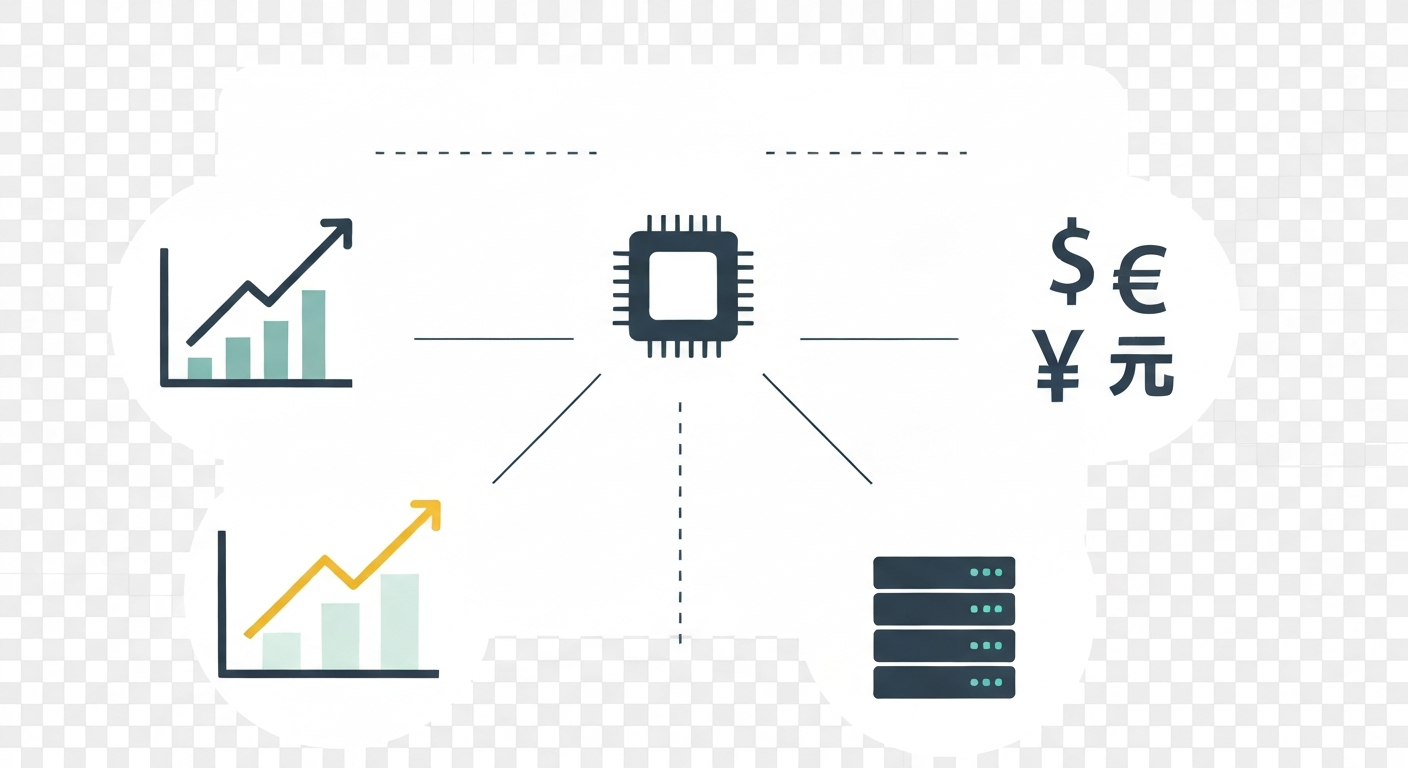
Competitive landscape: positioning within the AI bubble
Market leadership has concentrated among infrastructure and cloud incumbents, shaping competitive dynamics. Nvidia, Google, Meta, Microsoft, and Amazon have scaled capex and partnerships. For example, Nvidia’s valuation surge has created dominant pricing power in GPUs. Meanwhile, OpenAI diversified hardware suppliers through a chip partnership with AMD, signaling supplier diversification and strategic hedging. See AP News: AP News.
Venture capital remains active, however funding has bifurcated. Investors favor pure-play infrastructure and model startups. At the same time, later-stage rounds are pricing risk into multiples and liquidation preferences. Consequently, startups pursue differentiation through vertical specialization and proprietary datasets.
Competitive tactics observed
- Vertical integration: Cloud incumbents internalize models and data pipelines to control margins and lock in customers.
- Supplier alliances: Partnerships and equity stakes mitigate hardware concentration risk, as with OpenAI and AMD.
- Buy versus build: Firms choose M&A for fast capability acquisition, or in-house build to retain IP.
- Capital arbitrage: Venture funds rotate into synthetic compute plays and infrastructure assets.
Implications for stakeholders
Because competition concentrates around scarce compute resources, supply bottlenecks can amplify volatility. Therefore, corporate buyers should secure multi-supplier arrangements and stage deployments. As Brian Merchant observed, some investors treat infrastructure as ‘selling shovels during the gold rush,’ which underscores tactical value of providers amid the AI bubble.
Investment flows and valuation trends (AI bubble context)
Table summarizes recent investment flows and valuation trends tied to the AI bubble. Therefore, treat figures as directional indicators.
Data reflects rising capital intensity and valuation concentration.
The AI bubble now frames strategic decision-making for corporate leaders and investors. Market concentration, rapid capex, and inflated valuations demand immediate attention. Because Nvidia and several cloud incumbents command disproportionate market influence, systemic sensitivity has increased. Goldfarb and Kirsch rate AI high on bubble risk, which underscores structural uncertainty.
Current manifestations show elevated public and private capital flows. Major firms increased AI budgets and pursued vertical integration and supplier alliances. OpenAI’s ties with AMD and Nvidia’s pricing power illustrate supply-side leverage. Meanwhile, an MIT study found most generative AI investments have not yet delivered profits, which highlights execution risk and uncertain ROI.
Therefore, tactical responses must favor optionality and staged commitments. Executives should prioritize scenario planning, stress testing, and multi-supplier contracts. Investors should monitor pure-play exposure, novice investor inflows, and narrative alignment. As Brian Merchant noted, some participants act like ‘selling shovels during the gold rush,’ which emphasizes infrastructure value during speculative cycles.
In practice, cautious vigilance will mitigate downside risk while preserving upside optionality. Consequently, disciplined capital allocation and transparent governance provide the best defense. Stakeholders who align timing, cost controls, and strategic milestones will navigate the AI bubble with greater resilience.
Frequently Asked Questions (FAQs)
What is the AI bubble?
The AI bubble denotes rapid valuation expansion driven by AI adoption, GPU capex, and data center growth. It reflects speculative pricing, concentration among infrastructure providers, and greater novice investor participation. Goldfarb and Kirsch rate AI 8/8 on bubble risk.
How does the AI bubble affect investment strategies?
Because capital reallocates to AI, investors reweight portfolios toward pure-play infrastructure and models. Venture funds favor later-stage defensible assets, while public market investors concentrate in a handful of leaders. Therefore, valuation multiples and capital intensity have risen.
What risks should corporate stakeholders expect?
Primary risks include execution shortfalls, supply bottlenecks, and single-vendor concentration. An MIT study found most generative AI investments have not delivered profits, which highlights ROI uncertainty. Consequently, regulatory and macro shocks could trigger rapid repricing.
How should firms and investors respond tactically?
Firms should stage CapEx, secure multi-supplier contracts, and implement stress tests. Investors should monitor novice investor inflows, pure-play exposure, and narrative alignment. Staged commitments preserve optionality and limit downside.
What is the near-term outlook?
Capital flows will likely remain elevated, but volatility will persist. Some participants expect transformative outcomes; Bill Gates noted that ‘something profound’ may emerge. However, disciplined governance and timing remain decisive.
