

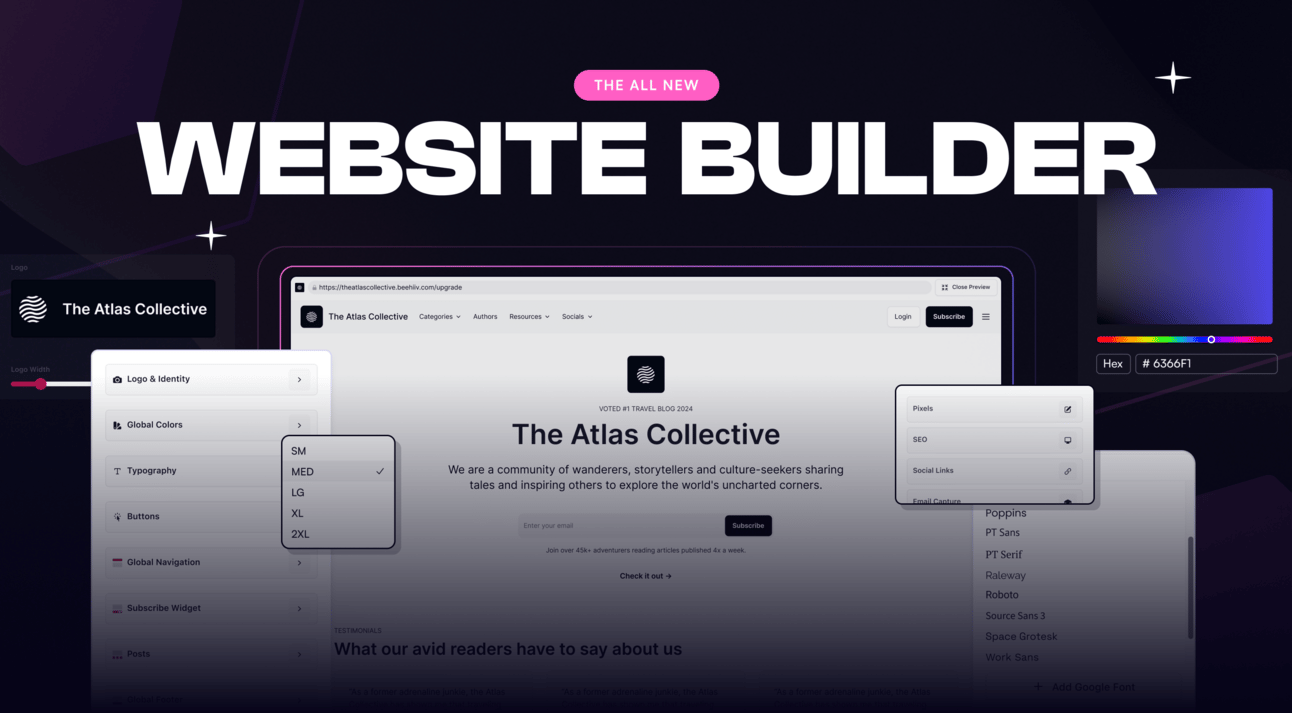
Beehiiv expands beyond newsletters with AI website builder. The move extends the company from email products into website infrastructure for creators and publishers. The company launched the website builder in July after acquiring TypeDream. It also added podcast support and digital product sales. CEO Tyler Denk framed the platform as “the operating system of the content economy.” Company statements emphasize zero take rate on transactions because revenue derives from subscription fees only.
This expansion attempts to capture cross product demand among long tail creators and enterprise publishers. Therefore Beehiiv seeks to compete with Substack and Patreon while differentiating through integrated site tooling. However the firm positions itself as backend infrastructure similar to Shopify rather than a front facing consumer brand.
Market implications include a broader monetization playbook and likely consolidation in the creator stack. As a result marketing and growth investment will increase in the next quarter. Analysts should note that diversified product suites can raise retention but also invite feature overlap with incumbent web platforms.
Beehiiv launched an AI website builder in July after acquiring TypeDream, and the product immediately aimed to extend functionality beyond email distribution. The company added native pages for podcasts and digital products, and integrated site design with subscriber workflows. Tech reporting noted the rollout as part of a broader suite of creator tools because Beehiiv seeks to be the “operating system of the content economy.” TechCrunch article
Core capabilities and differentiators include
- AI assisted page creation that generates layouts and copy from brief inputs, therefore reducing time to publish
- Customizable templates and TypeDream derived components for branding and design consistency
- Built in commerce for selling digital products and courses, which integrates with subscription billing without a take rate
- Native podcast pages and embeddable players to consolidate audio and written content
- Lead capture, analytics, and SEO features that feed back into email segmentation and monetization strategy
Strategic implications
This product move represents a tactical maneuver to capture creator demand for integrated site tooling. As a result Beehiiv narrows the gap with incumbents like Substack and Patreon, and simultaneously positions itself as backend infrastructure similar to Shopify. Analysts should note that integrated suites can increase retention, however they also raise the risk of feature overlap with platforms such as WordPress and Wix. WebProNews coverage framed the expansion as a deliberate step toward broader creator infrastructure. WebProNews coverage
CEO Tyler Denk described the strategy as building tools in the background, and the phrase “this is the operating system of the content economy” reinforces that posture.

Beehiiv expands beyond newsletters with AI website builder: competitive feature comparison
The following matrix compares Beehiiv’s AI website builder with leading alternatives across technical, commercial, and positioning vectors. Therefore analysts can quickly assess differentiation, overlap, and potential market friction.
Summary observation
Beehiiv differentiates by embedding AI-driven site generation into an email-centric workflow. However incumbents retain strengths in extensibility, commerce scale, or simplicity. Therefore the competitive landscape will reward integrated stacks that minimize friction between content creation and monetization.
Market implications and strategic context
TechCrunch article.
Therefore the platform now competes on both product depth and workflow integration. This represents a strategic shift for the product.
Competitors such as Substack and Patreon retain audience monetization strengths, while platforms like WordPress and Shopify provide extensibility and commerce scale. However Beehiiv differentiates by integrating AI driven page generation directly into email workflows. As a result creators face lower time to market, and publishers gain tighter analytics tied to subscriber revenue.
Strategic advantages include higher retention, cross sell of digital products, and a clearer enterprise pitch for publishers like Time and Newsweek. Moreover the no take rate policy reinforces direct revenue capture through subscriptions, but it also requires sustained ARPU growth and marketing spend. Analysts should note CEO Tyler Denk’s description that the company aims to be “the operating system of the content economy,” which signals infrastructure ambitions recognized by trade coverage. WebPro News article.
Looking ahead consolidation and feature creep will intensify in 2026. Consequently Beehiiv must scale platform reliability and partner integrations while controlling customer acquisition costs.
Beehiiv’s move into AI-powered website building crystallizes a strategic shift from newsletter provider to integrated creator infrastructure. The company leverages its TypeDream acquisition and AI tooling to shorten time to market and consolidate content workflows. Therefore creators and publishers gain unified publishing, commerce, and analytics, which increases potential retention and average revenue per user. Moreover the no take rate policy preserves creator economics while placing emphasis on subscription monetization.
For stakeholders this signals three tactical priorities:
- Product depth: rapid feature expansion to reduce churn and expand ARPU.
- Go-to-market: accelerated marketing spend to capture creator segments and enterprise publishers.
- Partnerships and integrations: necessary to offset feature creep and match extensibility of incumbents.
However risks remain. Consolidation in the creator stack will intensify, and platform differentiation requires sustained reliability and developer ecosystems. As a result Beehiiv must balance rapid growth with operational scaling. Only then can it realize its ‘operating system of the content economy’ ambition.
Frequently Asked Questions (FAQs)
What capabilities does Beehiiv’s AI website builder offer?
The builder generates page layouts and draft copy from brief prompts. It integrates podcast pages and built-in commerce for digital products. It synchronizes subscriber data with site analytics and feeds email segmentation, reducing time to publish.
How does this shift affect Beehiiv’s competitive positioning?
The move expands Beehiiv from a newsletter provider to integrated creator infrastructure. Therefore it positions the company against Substack and Patreon while also narrowing gaps with WordPress and Wix.
Will Beehiiv charge transaction fees for commerce functionality?
No. The company maintains a no take rate on transactions, and it relies on subscription revenue. As a result creators retain economics while Beehiiv must grow ARPU and subscription volumes.
What operational risks should stakeholders consider?
Feature overlap with incumbents and consolidation in the creator stack present risks. Beehiiv must scale platform reliability and partner integrations, and it must allocate marketing spend to acquire creators.
Which metrics should analysts monitor going forward?
Monitor retention, average revenue per user, and churn. Also watch enterprise adoption among publishers, feature uptake for AI tools, and customer acquisition cost trends.
