

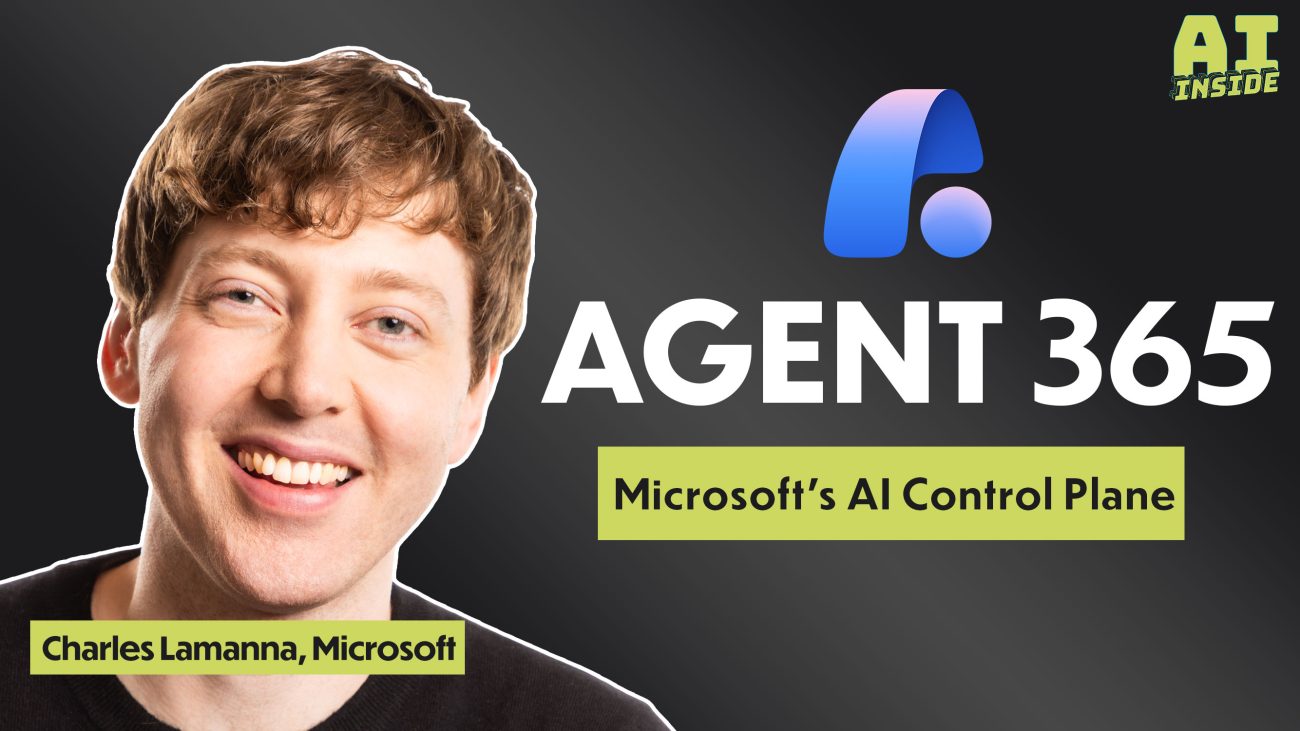
Microsoft Agent 365 provides enterprises a centralized registry to manage and secure growing fleets of AI agents. Launched into Microsoft’s early access program, it assigns identification numbers and usage metadata to active agents, enabling auditability and governance. Because organizations face exponential agent proliferation—Charles Lamanna cites teams with 100,000 employees using as many as half a million to a million agents—Agent 365 addresses scale through inventory, permissioning, and integration with Copilot and third-party platforms. Moreover, it implements real-time security scans and data protections so that, as Microsoft states, “As data flows between people, agents, and applications, it stays protected.” Therefore, the product positions Microsoft as a vendor that shifts procurement and operational controls toward managed agent ecosystems, which affects vendor selection, compliance, and enterprise automation strategies.
Core functionalities of Microsoft Agent 365
Microsoft Agent 365 centralizes agent lifecycle management into an auditable registry that catalogs active AI agents with unique identification numbers and usage metadata. Because enterprises face rapid agent proliferation, this registry functions as an inventory and control plane that supports scale, accountability, and vendor governance.
- Registry and inventory management: maintains agent IDs, versioning, ownership, and usage logs for traceability.
- Real-time security scanning: monitors agent behavior continuously, detects anomalous activity, and mitigates prompt injection and exfiltration risks.
- Permissioning and governance controls: enforces role-based access, scopes agent permissions, and integrates with existing identity and access management.
- Integration and extensibility: connects with Microsoft Copilot, first-party toolchains, and third-party platforms to standardize deployment pipelines.
- Analytics and procurement alignment: provides telemetry for cost allocation, operational efficiency, and procurement policy enforcement.
As Charles Lamanna observed, “As data flows between people, agents, and applications, it stays protected,” which underscores the product’s tactical focus on secure, trackable automation.
Market positioning and competitive landscape for Microsoft Agent 365
Microsoft Agent 365 positions Microsoft as a governance and control layer for enterprise AI agents, launched into early access and aimed at large-scale deployments. Because organizations face exponential agent growth, the product targets procurement, security, and operational teams as primary buyers.
Differentiation rests on three tactical pillars.
- First, a centralized registry delivers inventory, audit trails, and versioning for traceability.
- Second, real-time security scans and permissioning reduce operational risk and support compliance.
- Third, integration with Copilot and third-party platforms creates an extensible deployment fabric that aligns with enterprise toolchains.
As a result, Microsoft leverages ecosystem breadth to create switching costs while offering governance to mitigate vendor risk. “Resisting having agents enabled is kind of like resisting giving internet or PC access to your employees,” which frames adoption as operational inevitability.
Competitive dynamics include:
- Cloud incumbents and security vendors racing to add agent governance.
- Startups specializing in agent orchestration offering niche capabilities.
- Enterprise buyers prioritizing telemetry and procurement controls.
Given internal estimates that large teams could deploy hundreds of thousands of agents, Microsoft Agent 365 targets scale, compliance, and procurement efficiency as its primary market levers.
The comparison below contrasts Microsoft Agent 365 with Google Cloud Vertex AI plus partners, Amazon Web Services Bedrock ecosystem, and agent orchestration startups across key areas such as registry and inventory, real-time security scanning, integration and extensibility, enterprise scale and procurement alignment, and strategic advantage.
Registry and inventory
- Microsoft Agent 365: Centralized auditable registry with agent IDs, versioning, and usage logs
- Google Cloud (Vertex AI plus partners): Strong model and pipeline metadata; limited native agent registry capabilities
- Amazon Web Services (Bedrock ecosystem): ML model registry and governance; agent-specific registry often via partners
- Agent orchestration startups: Focused registries; variable maturity and enterprise integration
Real-time security scanning
- Microsoft Agent 365: Built-in continuous behavior scans and prompt-injection mitigation
- Google Cloud (Vertex AI plus partners): Security through Cloud IAM and partner tools; fewer integrated agent scans
- Amazon Web Services (Bedrock ecosystem): Integrates with AWS security services; agent scanning typically via third-party tools
- Agent orchestration startups: Varies; some offer runtime monitoring but limited scale proof points
Integration and extensibility
- Microsoft Agent 365: Native Copilot integration; supports first-party and third-party agents
- Google Cloud (Vertex AI plus partners): Deep ML tooling and data services; integration via partner ecosystem
- Amazon Web Services (Bedrock ecosystem): Broad ecosystem and enterprise services; integration through partners and AWS tooling
- Agent orchestration startups: Rapid integration with niche tools; may lack enterprise-grade connectors
Enterprise scale and procurement alignment
- Microsoft Agent 365: Designed for large deployments; telemetry for cost allocation and procurement controls
- Google Cloud (Vertex AI plus partners): Proven ML scale; procurement workflows depend on partner implementations
- Amazon Web Services (Bedrock ecosystem): Enterprise-scale infrastructure; procurement controls available through AWS programs
- Agent orchestration startups: Scalable designs exist but require vendor evaluation and customization
Strategic advantage
- Microsoft Agent 365: Governance-first positioning that creates switching costs and supports compliance
- Google Cloud (Vertex AI plus partners): Strength in ML platform and data services; accelerates agent development
- Amazon Web Services (Bedrock ecosystem): Strength in infrastructure breadth and security services; flexible deployment models
- Agent orchestration startups: Niche innovation and speed to market; specialized features for orchestration
Microsoft Agent 365 consolidates agent inventory, governance, and runtime security into a single control plane. Because enterprises confront exponential agent proliferation, the product reduces operational friction and aligns procurement with telemetry. Its registry, permissioning, and real-time scans position the vendor as a governance-first provider, which creates switching costs for customers. Moreover, integration with Copilot and third-party platforms supports extensibility and enterprise toolchain alignment.
Operationally, Agent 365 converts untracked automation into a managed asset class, enabling auditability and cost allocation. As Charles Lamanna observed, “As data flows between people, agents, and applications, it stays protected,” which underscores Microsoft’s emphasis on secure workflows. Therefore, stakeholders should evaluate Agent 365 as a tactical component in automation strategies. In sum, the product reframes agent deployment as a governed, scalable enterprise capability.
Frequently Asked Questions (FAQs)
What is Microsoft Agent 365?
Microsoft Agent 365 is a centralized registry and governance platform for enterprise AI agents. Because enterprises face rapid agent proliferation, it provides agent IDs, usage metadata, and real-time security scans to enable auditability and compliance.
Who should evaluate Microsoft Agent 365?
Procurement, security, and IT operations teams should evaluate it. Therefore, organisations that plan large-scale automation or Copilot integration will find the tool tactically useful.
How does Microsoft Agent 365 differ from competing offerings?
The product adopts a governance-first posture, integrates natively with Copilot, and embeds continuous runtime monitoring. However, cloud incumbents emphasize model tooling, while startups focus on orchestration.
What limitations and risks should stakeholders consider?
Early agent tests show task failures and integration complexity, so pilots are essential.
In addition, procurement alignment and vendor lock-in require governance review.
What is a recommended adoption approach?
Start with a controlled pilot, define permissioning and telemetry policies, and scale deliberately.
As a result, organisations convert untracked agents into managed assets.
